


ADVOCATE: Pamela Breezeatl on Deep Empathy, Inclusion, and Living in Celebration of the Imperfect
Meet Pamela Breezeatl — a lifelong advocate whose life has been shaped by empathy, observation, and a deep respect for human connection. From volunteering in special education classrooms as a teenager to supporting non-speaking individuals and care teams later in life, Pamela has built her world around listening closely, looking beyond labels, and helping others find more balance. She describes herself as “a humane being,” and that idea sits at the center of everything: the way she works, the way she listens, and the way she moves through the world in celebration of the imperfect.
On Being a Savant
What Does Being a Savant Mean to You?
In my eyes, a savant is a person with deep empathy who mirrors the world around them as they discover their unique ability to exist in harmony within the chaos, the harmony, and the solitude.
I am a traveler in this life. I am learning how to listen, observe, and maintain my inner balance amidst the ups and downs occurring between myself and others. I am learning to monitor my responses by recognizing and reframing any off-track thoughts, feelings, and urges so that I can function effectively within my community of family, friends, and caregivers.
The Moment You Knew You Were Unique
How Did It Shape You?
I was a young child. I remember accompanying my paternal grandmother to one of her doctor’s appointments. I remember feeling her pain while she was there.
A few years later, after we moved from Dayton, Ohio to Penn Valley, Pennsylvania, I was 8 years old. My older sister was 16 and attended Devereux, a residential private school for emotionally challenged teens. When she was home, she and my mother would argue, and when my father came home, the arguing sometimes turned violent. My parents would send me into my sister’s room to sit with her. I would listen to her as she cried and told me things that I was doing that were “bad.” I wondered if she was using me as a mirror to see herself.
We moved several times during my childhood, and when we landed in Penn Valley, a new state and a new school marked the beginning of my existence as a being separate from everyone around me. My father was lost in his work. My mother was lost in her paintings and sculpture. I barely knew my older siblings, and my peers in school constantly laughed at me and played mean jokes on me because of my Ohio accent. I was even pinned against a wall with a chair by a very big boy.
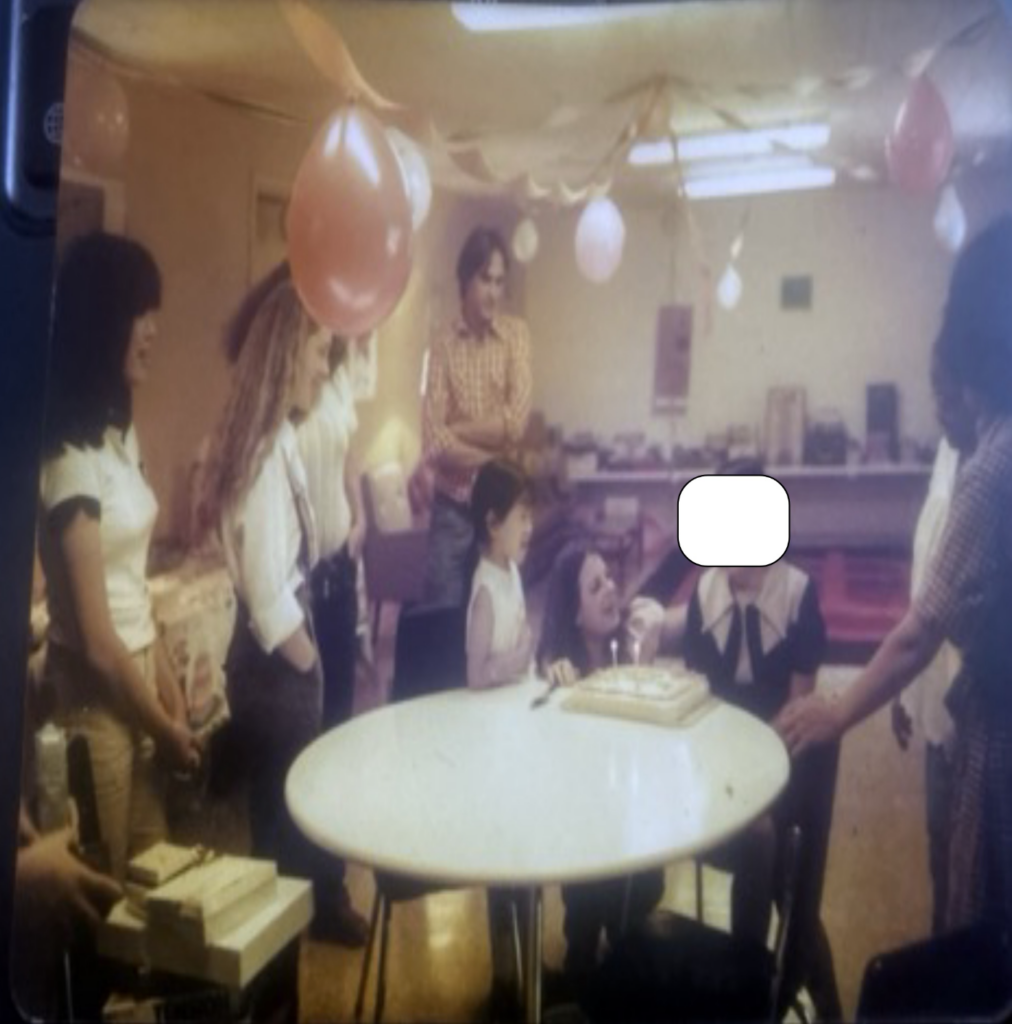
I learned how to survive as a tomboy with no friends except for my two German shepherd dogs, Mama Olga and her daughter Tovi. They were my favorite people. My mother had a birthday party for me when I turned 9 and invited all the students who were mean to me. I spent that party with Olga and Tovi. That’s when I knew I was different.
Daily Rituals
What’s Your Daily Ritual for Tapping Into Your Genius?
I’m discovering the power of intentional breathing.
I seek knowledge so I can better assist the individuals and teams I support. Through that search for knowledge, I’ve discovered essential components for healthy living that align with our unique circadian rhythm. I’ve been blessed to study experts connected to functional communication training, visually structured teaching, body signals, interoceptive awareness, DBT, and CBIT. These practices have influenced my daily rituals, thought practices, prayers, and affirmations.
I drive from Bucks County, Pennsylvania to Northern Montgomery County and Delaware County throughout the week. My morning and evening commutes are my time to reflect on the individuals I encounter, their needs, their strengths, and my presence as a channel for their self-healing. I focus on my breath, my surroundings, my body signals, my feelings, my thoughts, and my urges. I do my best to demonstrate the emotion regulation skills and practices I share with the individuals I support and their teams.
I find myself constantly seeking and finding connections between my thoughts and ideas about life and echoes of those thoughts in songs, music, poetry, and people. This is how I found The Savants. My daily rituals are fueled by my inner drive for connection and understanding.
On Identity
In a World Obsessed with Labels, How Do You Define Yourself?
I have always seen myself as a humane being.
We have so many labels in our society. So many classifications, distinctions, borders, and political ideologies that wreak havoc, chaos, and destruction on so many around the globe. I see myself as a humane being with the ability to see divinity in every being I encounter.
As a child raised in a household of Russian-Polish Jews, I remember an encounter between my father and a stranger who angrily asked him if he was a Jew. I recall the thick scar on my father’s left shoulder, which he said came from an assault by peers at an all-male boarding school who tried to carve a swastika into his shoulder. I also remember riots in the parking lot of my school in Dayton, Ohio. People were hurting each other because of labels and hate.
In 1977, I attended public school for the first time. I remember two special education classrooms that had only recently been put in place because the state was required to provide free public education to students with special needs. Those classrooms were labeled “educable” and “trainable.” I was one of the student volunteers. That experience shaped my life. It helped expand my abilities as a caring human, special needs advocate, and organizer of what became the Brother-Sister program.
In retrospect, my discomfort with labels has served as a catalyst for my personal and professional growth.
Misconceptions
What’s the Most Misunderstood Aspect of Your Identity or Life/Work?
I don’t really know how people perceive me. I think people’s perception of me is colored by their own views of life.
Throughout my life, I’ve moved in different circles with people from different backgrounds and practices. I know what it’s like to be seen as an object, and I know what it’s like to connect with people who see into my core, my essence, my soul. The people who see me are most often seen by others as the “misfits,” the ones who, for reasons beyond their understanding and mine, were separated from the masses and sent to places where they are supervised, monitored, medicated, and managed day and night for the entirety of their lives.
I sometimes think most people find my energy overwhelming. I have a lot of ideas, and I attempt to share ideas that connect with others who develop programs that foster self-awareness and self-healing. Not everyone understands. People tend to focus on fixing imperfections without seeing the beauty in being imperfect.
I live my life in celebration of the imperfect.
As I enter my senior years, I find myself enjoying my solitude. My need to be understood by others is present but subdued. I understand that many may be sleeping, but I know I am awake.
Creative Resonance
Which Piece of Music, Art, or Literature Speaks to Your Soul — and Why?
Music, literature, art, and theatre have captured my heart and soul in different ways throughout each chapter of my life.
As a child, I shared a room with my brother, who was six years older than me, and I memorized all of Yusuf/Cat Stevens’ songs. I loved and rewatched two films, Harold and Maude and The King of Hearts. At age 15, I started volunteering at Voyage House, a youth runaway center in Philadelphia. Through Voyage House, I met a counselor named Merle, who became my friend and mentor of sorts. Through Merle, I fell in love with the poetry of Hazrat Inayat Khan, whose prayers and poems touched my soul in a way no other book had up to that point.
At 21, I left Philadelphia to live at the Abode of the Message, a Sufi community in New Lebanon, New York. During that time, I discovered meditations and prayers from many different spiritual paths. I became a student of Indigenous cultures, read The Book of the Hopi, and joined RAIN, Rights for American Indians Now.
Another major influence in my life was The Kin of Ata Are Waiting for You by Dorothy Bryant, a fantasy about different levels of reality and a society where humans shape life based on dreams. I later shared that book with caregivers and students in the Intensive Needs classroom at Amherst Regional High School, where I served as a paraprofessional.
From age 13 to 18, I studied acting with Sidney Kay and was influenced by Krishnamurti, Eric Fromm, Carl Jung, Kierkegaard, Nietzsche, Doris Lessing, and Zen and the Art of Motorcycle Maintenance. There are many more books, artists, and forms of music that resonate with my spirit, but at this point in my life, the music I find most inspiring comes from the birds, the wind in the trees, and the ocean waves.
Legacy
What’s Your Legacy in the Making?
I hope I’m remembered for the love I helped others to find and nurture within themselves. I hope I inspire partnership toward a collective revolution of thought and action to build a society rooted in love and respect for all children and families. I hope I inspire the people I leave behind to value themselves and each other’s presence and to always, always find the good in themselves and each other.
Radical Truths
What’s the Most Radical Thing You’ve Ever Done in the Name of Passion?
I had a few thoughts about this question. My first thought involved the birth of my daughter, Thelma, a choice that resulted in my parents and siblings “dis-owning” me for four years and beginning my life as a single mom. Then there was the birth of my son, Paz, whose father I met when my daughter was a year and a half old. His birth was my first and only home birth. His father and I separated when Paz was two, but we worked together to raise Thelma and Paz, who have grown into successful, kind, and caring adults.
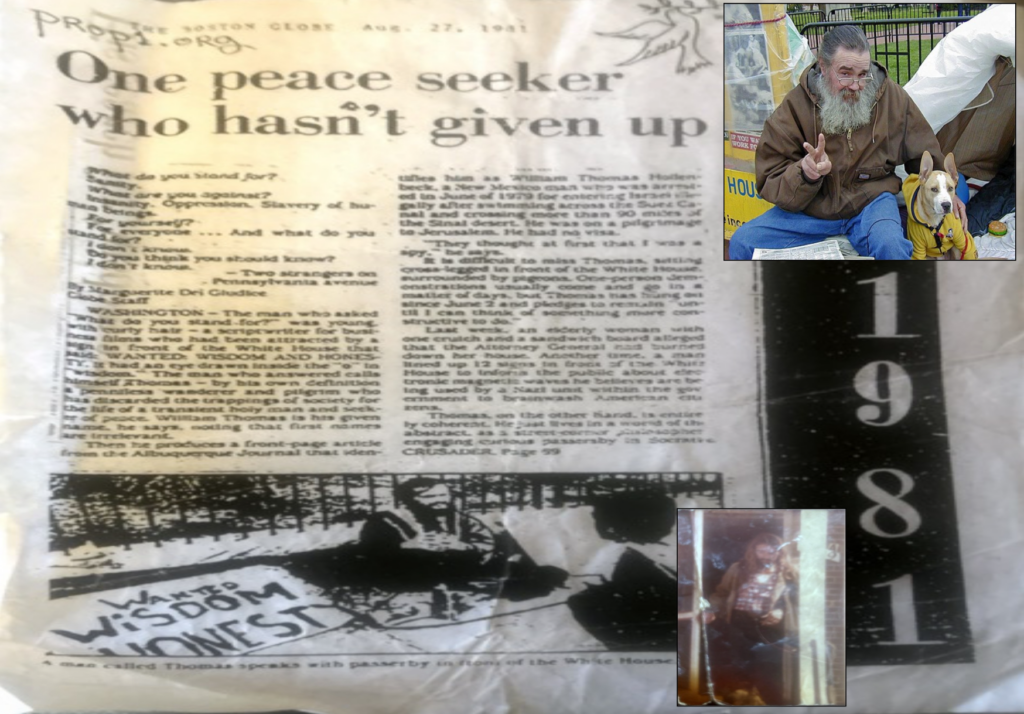
When speaking about “radical,” however, I must cite my experiences in Washington, DC and the meetings I had with William Thomas, a man who relinquished all possessions in search of wisdom and honesty.
During the winter of 1981 through the spring of 1982, I was a disillusioned freshman at the University of Maryland in College Park. I became a member of the Progressive Student Alliance, a student activist organization that joined with the Community for Creative Non-Violence, a DC-based group that established a tent city called Reaganville. My friend and former mentor, William Thomas, became the humble hero of Reaganville, and as a member of PSA, I volunteered to stay there to hold the permit if police came and asked us to leave.
I first heard about the tent city on the radio while helping my mom prepare Thanksgiving dinner in Penn Valley. I remember feeling inspired when I learned that a small group of people had set up a tent city and were feeding Thanksgiving dinners to homeless people sleeping in the park and on the streets of Washington, D.C.
When I returned to school after Thanksgiving break, I started traveling to D.C. and re-connected with a man named DJ, someone I had seen on campus and at a local café where I had recently started working. DJ was an amazing guitar player and songwriter, and at the time I was struggling with the conflicts I observed across economic, cultural, and demographic groups. I couldn’t understand how poverty could exist beside the waste and materialism of the wealthy. I became infatuated with living on the fringe and spent as much time as I could at the tent city, dumpster diving for food, engaging in philosophical discourse with Thomas, and singing on the streets of Georgetown with DJ.
This chapter of my life was intense, idealistic, and at times dangerous. DJ was attacked one night and ended up needing 16 stitches in his forehead. After leaving the University of Maryland, I returned to Pennsylvania, worked part time as a Hebrew school teacher, volunteered at a homeless shelter for women and families, and eventually moved to the Abode of the Message, a community founded to honor the teachings of Hazrat Inayat Khan.
I don’t regret the decisions I made during that chapter, but I do have regrets. I know I put myself in harm’s way before I had my kids. I mostly regret the emotional immaturity I experienced when my children were very young. My struggle between idealism and reality clouded my vision and judgment. I was often seeking connection with people who didn’t truly see me, and in retrospect, I didn’t truly see myself.
I am grateful for the experiences I’ve had and the people I’ve met throughout my life. I’m especially grateful that despite and, perhaps because of, my impulsive and risky choices, my children and I have grown into self-confident, caring, hardworking adults.
Balancing Chaos & Calm
How Do You Balance the Chaos and the Calm in Your Life?
My passionate search for meaning and balance has led me to uncover the power of breath.
As a lifelong learner, I am always seeking pathways to balance. This is my work and my focus with the people I serve. I research and find strategies and interventions to help others balance the chaos with the calm, and I do my best to model these same practices in my own life.
I drive over 100 miles five days a week, most weeks. I find solace in the solitude of driving, and I sometimes find connections as I stream various programs. This is how I discovered Cold Case. I believe that praying is being. Every day, throughout the day, I connect with the Creator and surrender myself to the will of the Great Spirit.
I believe that the Great Spirit, Creator, God, however we identify that omnipotent energy, can be discovered through the breath. The breath is powerful. Our ability to control our breathing impacts not just us, but all those around us. We can calm ourselves and promote calm with others through patience, acceptance, and the power of our breath.

Role Models
Who’s Your Ultimate Role Model — And What Have They Taught You?
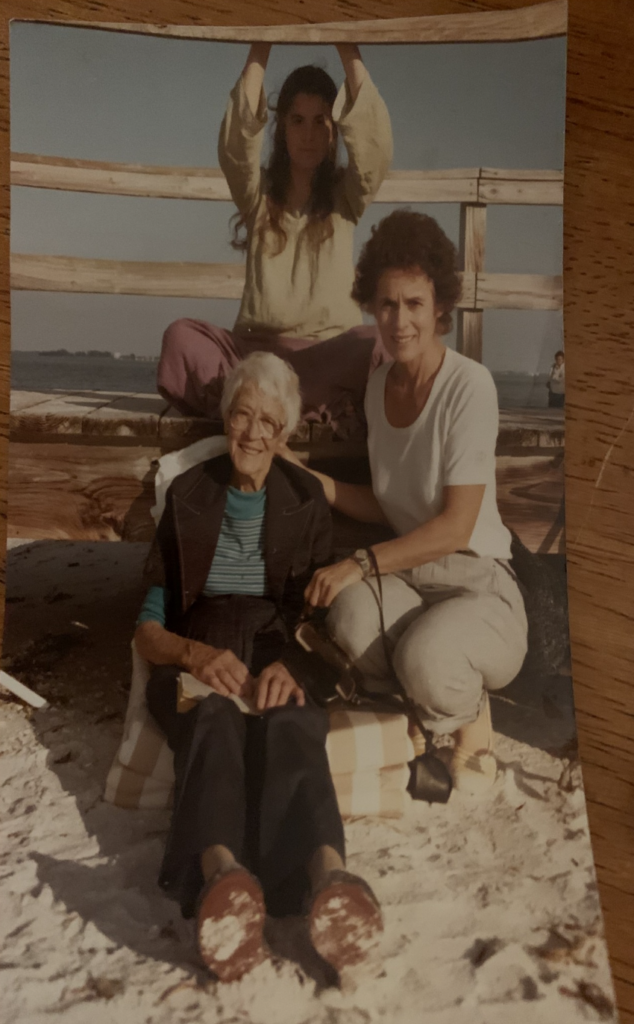
I’ve been blessed to have had a few teachers who challenged, inspired, and shaped my vision of life. The person who had the deepest influence on me was my maternal grandmother.
She always saw me as special, different from my siblings. She accepted me as I am, and she taught me that I can receive wisdom from anyone, regardless of their status or situation. As a child, I remember my grandmother allowing me to “teach” her. She would sit and listen as I wrote on a chalkboard and explained all the important things.
My grandmother loved learning. She was always taking classes and reading. She also instilled in me the importance of health and nutrition. Later in life, I learned that before she passed, she wanted to stay at a raw vegan healing ranch in Florida. She planted seeds in me that shaped my own search for truth around health, healing, and reverence for life.
She was not perfect, but she was my forever friend. She lived with us in the summers and was my companion when my mother was lost in her painting and my father was lost in his work.
My grandmother showed me unconditional love and acceptance. I am a lover of learning and a giver of love because of the love my grandmother gave me.
Wisdom to the Younger Self
If You Could Speak to Your Younger Self, What Advice Would You Give?
I would be present with my younger self, model slow deep breathing, and embrace my younger self with patience, acceptance, and respect.
I would encourage my younger self to be in love with myself. I would inspire my younger self to create my own happiness and enjoy my solitude. I would encourage my younger self to slowly cultivate connections with healthy people. I would urge my younger self to listen wholeheartedly to each person I meet and to seek connections with people who will listen to me to understand me.
And pragmatically, I would advise my younger self to save money.
The Power of Words
What’s Your Favorite Curse Word or Expletive, and Why?
The term I most identify with is the “F” word, especially the version of it in American Sign Language that can also mean “stuck.” I tend to use the “F” word when I’m frustrated, in immediate pain, and/or really really angry.
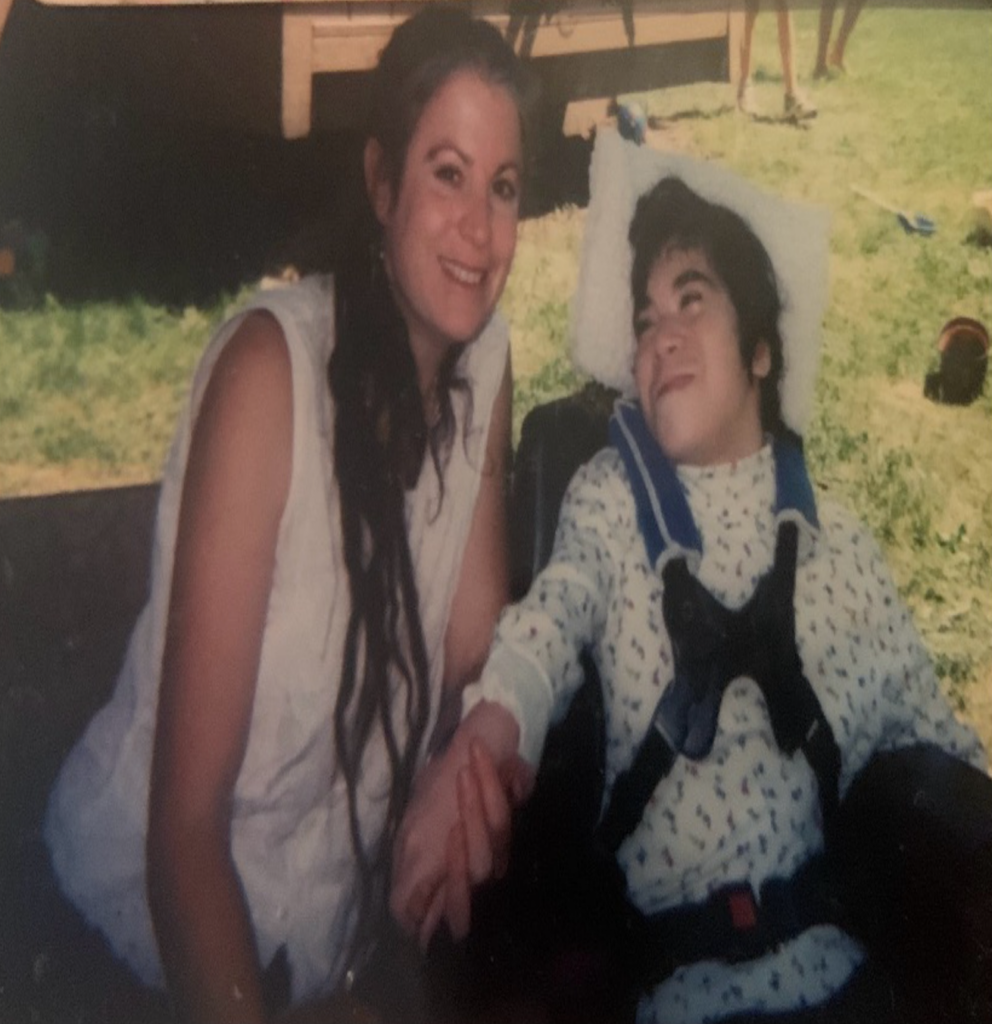
I have always been fascinated by sign language. I first learned sign language as a child care worker, then team leader, then teacher for a young woman with autism. Through this person, I learned to use sign language and song to help her speak. Through her, I fell in love with sign language.
Several years later, I attended a two-year Deaf Studies program at Holyoke Community College, where I learned more than ASL. I learned about Deaf culture, and I learned the meaning of that ASL sign for the “F” word that also means “stuck.” This is a common term used by Deaf teenagers, and it makes sense to me.
Looking Forward
What Are You Looking Forward To?
I am blessed to work with people who are dedicated to the well-being and growth of the individuals they support. Dana and Bob, the owners of the Human Achievement Project, were my former teammates from Merakey’s DDTT, Dual Diagnosis Treatment Team. Through this team I met Sotonye George, the CEO and founder of Resource Pro. Both agencies provide residential and habilitation services to individuals with complex needs and challenges. These small but mighty organizations provide lifesaving services to the most vulnerable members of our community.
I support 11 individuals and their teams as a Behavior Specialist. I’ve learned that people demonstrate “challenging behaviors” not to seek attention but to make connections. Some of my individuals are non-speaking and benefit from non-traditional methods to convey their thoughts and feelings.
By embracing total communication using sign language, gestures, visual supports, and AAC systems, the non-speaking individuals I support have received iPads with voice output programs like The Grid app and TouchChat through Just So Speech and Temple University’s TechOWL. But to quote one of my individuals’ communication apps, tools like self-regulation strategies are “useful, only when we use them.”
We are extremely grateful for our connection with the pro-bono speech and occupational therapy services through the student-run Widener University Community Clinic. Through the dedication and creativity of graduate students, supervising clinicians, and professors, the individuals we support and the staff working alongside them are learning to communicate their needs more effectively while also making friends through group games with other AAC users and clinicians. I now support four, soon to be five, individuals receiving speech and soon OT services, and I’m hopeful about the opportunities that lie ahead for my folks who benefit from Widener’s services.
I also have a friend who, until now, had never been seen as the talented artist that he is. Through a previous connection, I learned about The Monkey’s Uncle in Doylestown, Pennsylvania, a store that sells Philly sports apparel and one-of-a-kind merchandise made by individuals with special abilities. Jeanell and Derrick, the owners of The Monkey’s Uncle and founders of Monkeys On A Mission, saw my friend’s “savant” abilities and invited him to be the featured artist from April 7 through April 30 using his painting Picasso Man.
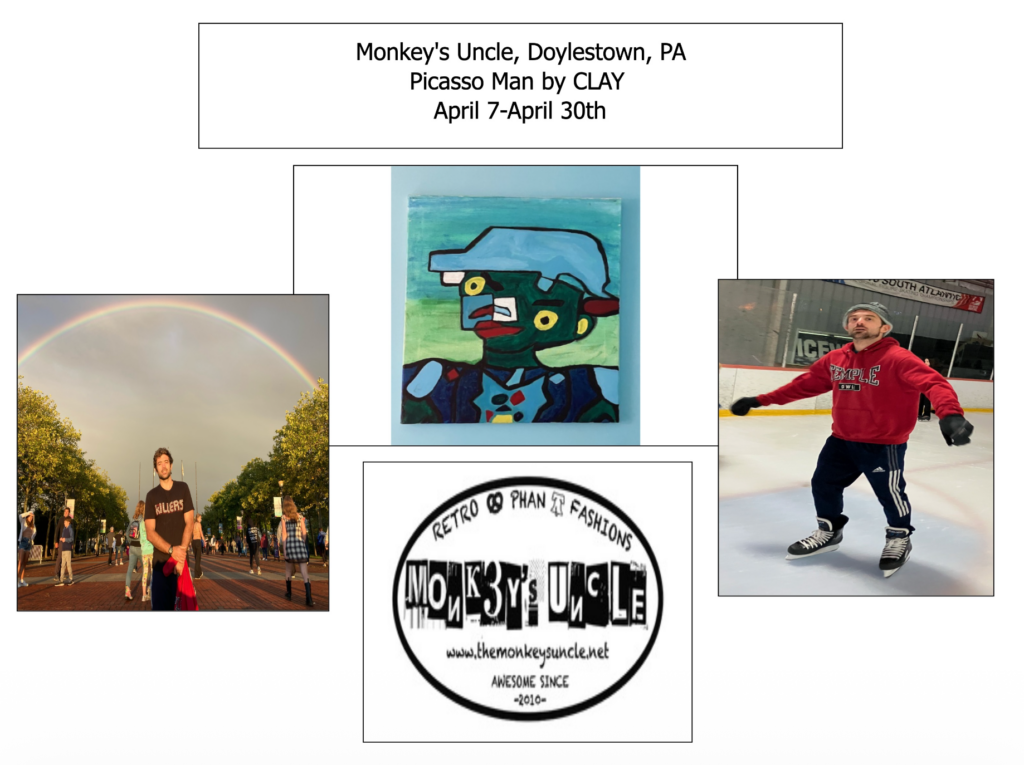
While his spotlight there is finished, my friend is now connected with a program through Community Integrated Services/Creative Employment Solutions that provides job coaching focused on arts and entrepreneurship. I’m looking forward to learning more about the opportunities this program offers for artists with unique abilities and talents.

Connect With Pamela Breezeatl
Pamela primarily keeps her life and work rooted in direct community connection, and she welcomes the opportunity to make new friends. As a PA licensed behavior specialist, her current work involves sharing evidence-based strategies that foster self-awareness, emotion regulation, advocacy, communication, inclusion, and connection.
Pamela helps individuals realize and sustain inner balance. She also helps team members and individuals use their skills to develop and maintain daily routines that foster self-love and sustain healthy relationships. Please email Pam at pam@hapinc.us if you would like to connect.